Iron Ore Processing
How iron ore is processed economically: jig, gravity separation, and magnetic separation—a comparison of hematite, magnetite, and concentrate.
Iron Ore Processing: Process Optimization in Raw Material Processing
Iron ore processing determines whether the mined raw ore can be transformed into a marketable concentrate for steel production—and thus the economic viability of the entire deposit. Modern processing plants combine gravity separation, density separation, heavy-medium separation, and magnetic separation into integrated flow sheets that precisely separate iron ore minerals such as hematite, magnetite, and associated minerals.
Increasing demands on concentrate quality, scarcer deposits, and higher energy costs make choosing the right process more important today than ever before. Anyone who wants to process iron ore needs a flow sheet tailored to the specific ore, particle size, and location.
What is iron ore processing?
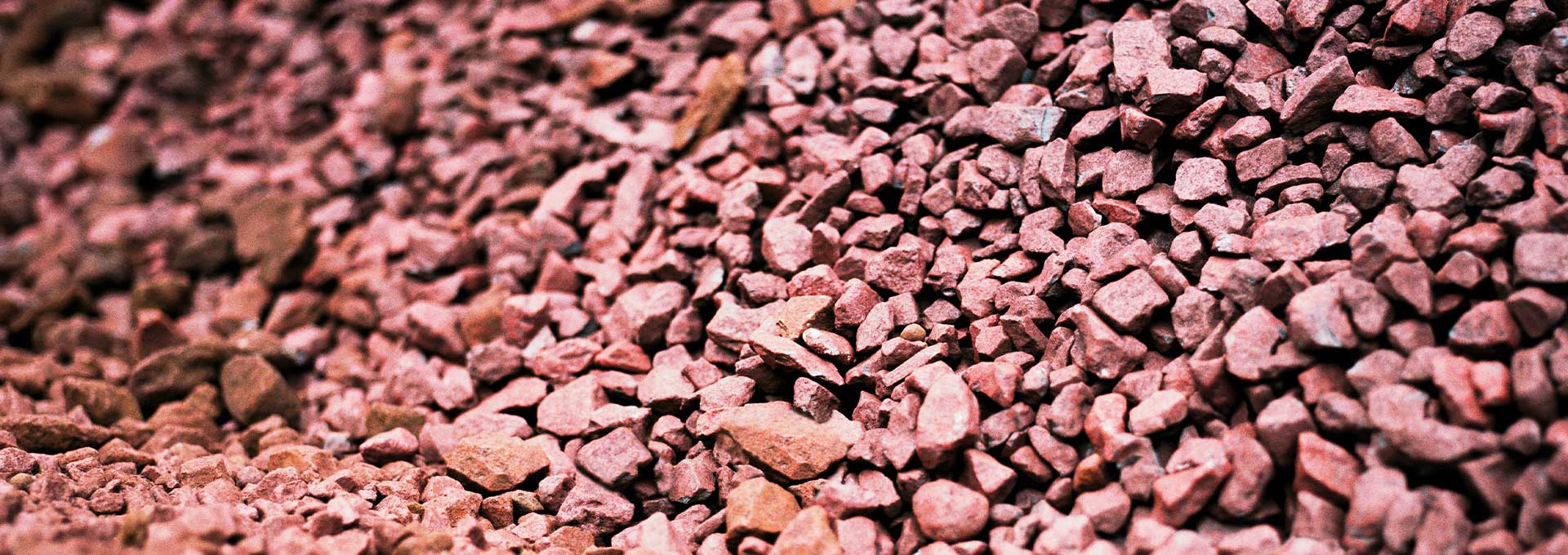
Iron ore processing encompasses all physical process steps between the ore deposit and steel production. The goal is to enrich the iron content of the raw ore to a marketable level—typically 62% to 69% Fe—by removing gangue.
In practice, this involves crushing and screening, followed by sorting and separation stages that classify the ore based on density, magnetic susceptibility, surface properties, or sensory criteria. Which processes are used and in what order depends on the iron mineralogy (hematite, magnetite, limonite, etc.), the degree of intergrowth, and local water availability.
How Iron Ore Processing Enables Economically Viable Operations
A well-designed iron ore processing system reduces the burden on all downstream stages—from pelletization and sintering to the blast furnace. Three approaches are particularly effective:
- Early pre-concentration: Even at coarse particle sizes, waste is separated—for example, using an X-ray sorter like the allsort—so that only the valuable material undergoes energy-intensive further processing.
- Selective enrichment in the fine range: Magnetic separation (allgaus), gravity separation, and flotation (allflot) extract the maximum value from the ore and increase the iron content in the concentrate.
- Robust plant operation: Processes such as alljig® operate reliably even with fluctuating feed characteristics—a decisive advantage in heterogeneous deposits.
Key process parameters include throughput, particle size, feed density, water/medium density, as well as magnetic flux density and rotor speed in the magnetic separation stage.
Hematite vs. Magnetite: Why the Processing Differs
Iron ores differ not only in their Fe content but, above all, in their mineralogical form:
- Magnetite (Fe₃O₄): strongly ferromagnetic; can be efficiently concentrated using conventional low-field/weak-field magnetic separation.
- Hematite (Fe₂O₃): only weakly magnetic (paramagnetic). Requires high-field magnetic separation (e.g., allgauss® with up to 15,000 gauss) or a combination of gravity separation and magnetic pre-concentration.
- Limonite/goethite: hydrated iron oxides, often finely intergrown. In this case, gravity separation and fluidized-bed classification are worthwhile as pre-concentration and main concentration stages.
Overview of Iron Ore Processing Methods
allmineral covers the entire spectrum of iron ore processing. Depending on the deposit and target concentrate, the processes are combined in a modular fashion:
Jig (alljig®) – the backbone of pre-concentration
The alljig® jig is the backbone of many iron ore flow sheets. In a pulsating water bed, particles stratify according to density and particle size. Despite fluctuating feed characteristics, the alljig® enables both concentrate enrichment and pre-separation of waste in a single step—ideal for particle sizes where sensor sorting or conventional magnetic separation reach their limits.
Dense Medium Separation (DMS) – When Separation Selectivity Matters
Dense medium separation (DMS) is used when particularly high demands are placed on separation density and selectivity. Separation takes place in a medium with a precisely adjusted density and delivers highly accurate, reproducible results—even for ores with a small density difference between the valuable material and the gangue.
Fluidized-Bed Classification (allflux®)
The allflux® combines classification and density-based sorting in a single stage. It is particularly well-suited for processing fine fractions of hematite and magnetite and can reduce water and energy consumption compared to multi-stage processing concepts.
High-Field MagneticSeparation (allgauss®)
The allgauss® high-field magnetic separator is used for the enrichment of hematite iron ores and the removal of paramagnetic impurities—with flux densities of up to 15,000 gauss and throughputs of up to 1,400 t/h per machine.
Sensor-Based Sorting (allsort® XRT)
The allsort® XRT sorter separates particles based on X-ray transmission signatures and makes inclusions visible. As a pre-concentration step for coarse-grained material, it significantly reduces the mass flows for the subsequent wet processing stages.
Flotation (allflot®)
Sulfide iron ores, particularly those containing pyrrhotite, can be concentrated through a flotation step (e.g., using the allflot). Since pyrrhotite exhibits magnetic properties, selective separation by magnetic separation is often not possible or only partially effective. In such cases, flotation enables targeted separation of the sulfide minerals.
Integrated Flowsheet: How an Iron Ore Concentrate Is Produced
A typical iron ore flowsheet at allmineral combines these processes in a modular format. Three proven configurations:
- alljig® + allgauss®: robust gravity pre-concentration followed by strong-field magnetic separation for hematite-dominated deposits.
- allsort® + alljig® + DMS: sensor-based coarse pre-concentration, a settling machine for the medium range, and DMS for the fine range to ensure maximum concentrate purity.
- allflux® + allgauss®: classification and magnetic enrichment stage for finely intergrown hematite and magnetite ores.
Advantages of optimized iron ore processing
- Higher Fe content in the concentrate and lower slag content in the blast furnace
- Lower specific energy costs due to early pre-separation of waste rock
- Economic exploitation of even low-grade deposits
- Reproducible results due to defined separation densities and magnetic flux densities
- Modular plants that can scale with deposit parameters or be relocated
- Reduced water consumption through the choice of dry or hybrid processing chains
A jig (alljig®) is a good choice when:
- High throughputs with moderate separation efficiency are required
- the feed material spans a wide range of particle sizes and densities
- the feed varies significantly and a robust process is required
DMS is suitable when:
- the highest separation efficiency at defined separation densities is required
- a stable medium circulation is economically feasible
- High-quality concentrates are to be produced in a single separation step
High-field magnetic separation is appropriate when:
- the ore is hematitic or paramagnetic
- the feed particle size is in the fine range (up to 3 mm)
- the highest concentrate purity from paramagnetic valuable fractions is required
Learn more about iron ore processing
We’ll help you find the right flow sheet for your deposit—including feed tests at the Global Testing and Research Center and the design of the appropriate processing stages. Talk to our processing experts.
Internal Links at a Glance
- Industry: Ores → Ore Processing
- alljig® Jigging Machine → alljig®
- allflux® Fluidized Bed → allflux®
- allgauss® Magnetic Separation → allgauss®
- allsort® XRT → allsort®
- allflot® Flotation → allflot
- Ore Processing Reference → Ore Processing with alljig®
- Testing Center → Global Testing and Research Center
- Contact → Contact Page
| Send email now to: | head(at)allmineral.com |
| Call now: | +49 (0) 211 522 88 0 |